The first renewable day
24 hours of grid energy provided only by solar, wind, hydro and batteries. Once a dream milestone for renewables advocates and an impossibility according to fossil fuel fanatics, the world’s first renewable day has already come and gone. Coober Pedy ran on renewables for a memorable 97 hours in December 2019.
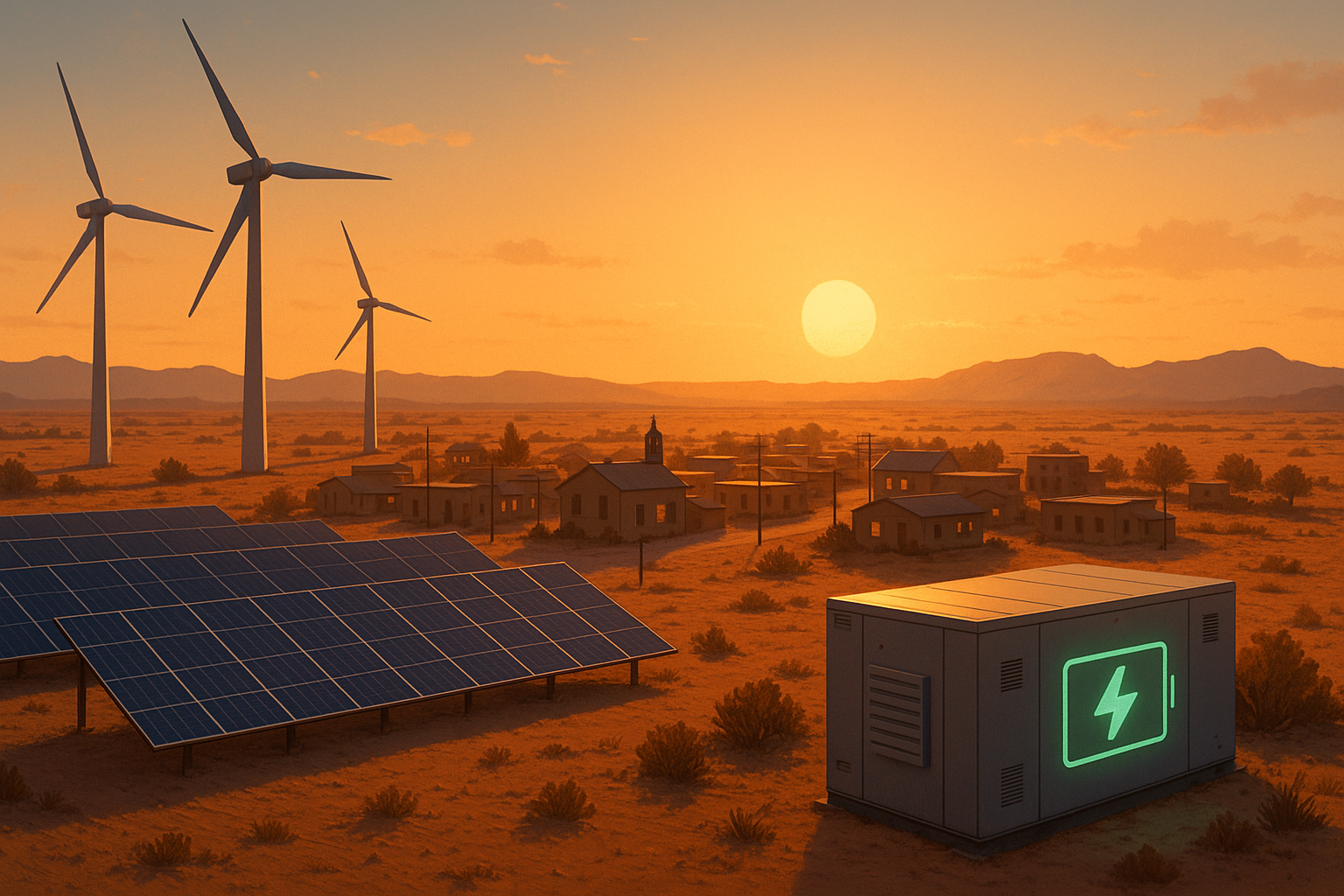
It’s going to take a lot of batteries. Fortunately, they’re easy to make.
Like many other once-impossible energy transition thresholds (100% renewable grid, batteries providing 100% of grid etc), this one came and went with little fanfare. Some observers noted the passing of another milestone. Energy utilities kept the fuss to a minimum.
One might imagine that successes like that at Coober Pedy would warrant celebration, but these are almost anti-successes, in that they mark steps toward the sunset of an old order. Proponents of a new world hail these events with enthusiasm, optimistic that the delivery of round-the-clock renewable energy on the grid without the need for fossil-fueled support is a signal of the beginning of a step change in the nature of electric grid services.
Like California’s first milestone of 100% renewable grid energy during the afternoon of April 30th, 2022, the first record quickly turns into a regular occurrence, followed by that event being the baseline of performance, of business as usual. What was once a record is now daily performance. In California, we’re up to six hours of 100% renewable energy with surpluses being exported to neighbouring service regions. In 2025, CAISO [3] reported 11.3 hours of 100% clean energy.
On April 16th, 100% of Spain’s national grid briefly ran on wind, solar and hydro. This was a brief moment [4], but that’s what this is about — brief moments that register for the first time, quickly followed by another brief moment, then by two or three more of those brief moments. Before long, a brief moment becomes less brief, minutes instead of seconds. Seconds soon turn to minutes and before long, the grid is powered with 100% renewables for an hour — another milestone. While we wait for Spain to hit 100% again soon, it won’t be as soon as we’d like because of local constraints — Spain’s renewables story is being [temporarily] hobbled by their unfortunate early adoption of Concentrating Solar Panels — the bright, shining towers where molten salt was used to spin turbines.
The Energy Transition is one long sequence of milestones, each disappearing into the rear-view mirror as new future opportunities come into view.
Some towns have run on renewable energy alone for long periods and Coober Pedy’s 97 hours of continuous energy was supplied from wind, solar and batteries. While this was a special event in a specific location, it nevertheless set the bar. Yes, the town is isolated and yes, there are all sorts of caveats here, but the headline remains accurate — a town of roughly 1500 people got all of its energy for more than a full day without needing diesel generators.
Realistically, we can look to South Australia to be the first region to run on 100% renewable energy for a full 24-hour period, probably some time in 2027. A lot has happened in South Australia in the last five years. Let’s consider the Hornsdale Battery [1] aka the “Hornsdale Power Reserve” (HPR) . The grid operator was contemplating building two gas peaker plants to provide grid support after the retirement of a large coal-fired power generation plant. A competing bid for a large-scale battery was accepted instead, and events in the following years effectively ended the use of gas peakers in Australia forever:
1st December 2017 - HPR connects to the South Australia grid for the first time.
14th December 2017 - HPR injects 7.3MW into the grid, stabilizing it long enough for other generation sources to come online. Grid stabilization of this kind was a feature the battery’s design provided, but had never been demonstrated until this event
After four months of operation, the battery saved AEMO (the grid operator) 90% on grid services.
In May 2019, HPR expanded charge/discharge from 30MW to 80MW and for longer durations, reducing curtailment of wind power. There is a longer story here, about how SA’s wind turbines had been struggling with curtailment for some time, but the short version is that the battery was able to absorb output from turbines that would otherwise have been wasted.
In January 2020, when the Heywood Interconnector failed for 18 days, HPR provided grid support and helped to limit power prices
25 May 2021 - HPR demonstrates inertial response, allowing the battery to provide grid inertia support.
(from Wikipedia, with dates reorganized as milestones)
The commissioning of the HPR marked a turning point in Australian energy politics — a wind storm had just torn up power lines, with wind farms being blamed for the ensuing energy market carnage. Anti-renewables campaigners seemed poised to set renewable progress back ten years, but in an irony of history, Elon Musk’s famous Twitter bet with Mike Cannon-Brookes got the battery installed in 63 days. Musk’s mercurial behaviour has since been controversial, but in this instance, the unusual deal catapulted South Australia’s energy transition forward, with innovations coming thick and fast.
It’s from this wild start that South Australia has been able to create massive PV penetration and develop industry-leading innovations.
For one example of this kind of explosive progress, in Episode #251 of the Energy Transition Show, James Brown[2] from SAPN describes how he and his colleagues developed the Common Smart Inverter Profile - a standard that inverter manufacturers adopted.
This is a long story that deserves more coverage, but for now, consider that James managed to get inverter manufacturers to agree to support a standard that allows the utility to manage exports from individual households. Homes with solar panels can sell their excess energy to the grid, as long as their inverters implement the Common Smart Inverter standard, meaning that the operator can turn down the user’s exports if they’re detrimental to the grid - curtailing it, in industry parlance. In return, the grid operator can allow the ongoing installation of grid-connected panels without concern for how they’re going to be able to disconnect those panels in times of oversupply or emergency.
Significant new transmission, battery and wind farm additions to SA’s grid are likely going to position that state for their first all-renewable day some time in 2027, when those additions will go live.
You heard it here folks.
[1] Famously, Elon Musk said it would be free if he did not meet the installation deadline of completion 100 days from contract signature. He delivered in 63 days.
[2] https://www.linkedin.com/in/james-brown-a856a7114/
[3] The CA grid operator: https://en.wikipedia.org/wiki/California_Independent_System_Operator
[4] Followed quickly by a complete failure of their grid a few days later. Later investigation cleared renewables generation of wrong doing. Long story, please do your own research, plenty of sources kthx.